
Product Information Management (PIM) Software

Surefront PIM software helps retailers, wholesalers and consumer goods brands organize product attributes, images, variants, and catalogs in a shared workspace. Connect structured product information with PLM product development, suppliers and merchandising teams.

Centralize product data

Organize product images and assets

Manage product categories and attributes

Customer evidence: In Surefront’s BaubleBar case study, the accessories brand organized more than 50,000 SKUs in a shared product catalog while reducing its product-development cycle from 6 weeks to 3 weeks.

Legacy Challenges

No Tools
Chaos reigns, emails fly, spreadsheets multiply, PDFs and Adobe files scatter like confetti. No system, no structure, just digital duct tape.

Too Many Apps
Airtable. One Drive. Monday. Jira. Great for everything. Perfect for nothing. Not built for merchandising. Definitely not for wholesale.

Legacy & Siloed Systems
Old-school PLMs. Clunky PIMs. Disconnected, disjointed, and dragging your ops into a black hole of inefficiency.

“Our buyers have specifically indicated it makes it easier to buy from us compared to before Surefront. Our team also required a quick implementation which Surefront was able to deliver on.”

Catalog Management

Organize and share product information with clarity

  • Customize product attributes by category with ease
  • Find products quickly using search, filters, and tags
  • Visualize digital assets such as product images + videos

Discover more about Catalog Management.

Organize and share product information with clarity

Tech Pack Builder

Design and generate customizable PDFs

  • Build flexible tech packs from product catalog
  • Customize product attributes + save templates for reuse
  • Automate PDF generation to eliminate data entry

Discover more about Tech Pack Generator.

Design and generate customizable PDFs

Master Data Management (MDM) + Digital Asset Management (DAM)

Rely on a single source of truth

  • Ensure data consistency across disparate systems
  • Enforce high data quality standards with validation
  • Organize + control valuable digital assets in a repository

Discover more about Catalog Management and Digital Assets.

Rely on a single source of truth

Retail PIM and merchandising: practical use cases

Retailers, brands and suppliers frequently need consistent product data across design, development, sourcing and merchandising. Product information management (PIM) helps teams organize item descriptions, attributes, variants, images and other product assets so they can be found, reviewed and shared.

  • Buyers and merchandisers: compare assortments and create consistent line sheets from structured product catalogs.
  • Product development: connect specifications, images and revision context as a product moves toward approval.
  • Suppliers and factories: collaborate on the product details, sample feedback and documentation they are authorized to see.
  • Sales and wholesale: build buyer-ready presentations, quotations and product selections without manually rebuilding item information.

Customer example: BaubleBar

In Surefront's published BaubleBar case study, the jewelry and accessories brand centralized more than 50,000 SKUs and reduced product-development time from 6 weeks to 3 weeks. The story also reports that line-sheet and product-data entry work that previously took hours was reduced to minutes. These are results from BaubleBar's specific combined PLM/PIM and collaboration workflows, not a guarantee from PIM alone.

Frequently asked questions about PIM software

What does PIM software do for retail and consumer goods?

PIM organizes product attributes, images, descriptions, variants and category information so teams can search and share consistent product records. Teams should verify channel-specific export and integration requirements during evaluation.

How does Surefront connect PIM and PLM?

Surefront offers connected PLM development workflows and PIM catalog management. Merchandisers, product teams and suppliers can work with related product information, while permissions and integrations depend on configuration.

Is PIM the same as PLM?

No. PLM helps manage product development, specifications, tech packs, samples and approvals. PIM emphasizes structured product data and its use by catalogs and commerce channels. See our PLM vs. PIM guide.

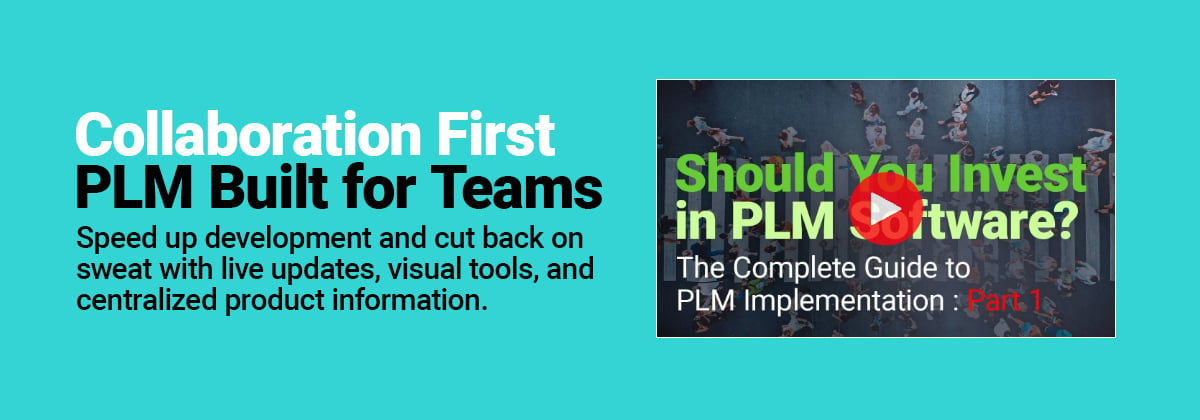
Collaboration First PLM Built for Teams

Case Studies

From Our Blog

Future Proofing MerchOps Workflows for the Next Era of Retail

Future Proofing MerchOps Workflows for the Next Era of Retail

Oct 3, 2025, 1:34:21 PM 6 min read
Make the Shift from Static Data to Dynamic Catalogs

Make the Shift from Static Data to Dynamic Catalogs

Oct 1, 2025, 1:58:32 PM 4 min read
Merchandising Reimagined: Driving Growth Through Strategy, Not Tasks

Sell Using Strategy, Not Just Execution

Merchandising Reimagined: Driving Growth Through Strategy, Not Tasks

Sep 30, 2025, 2:59:20 PM 6 min read
Watch a Surefront Recorded Demo
See it in action
Watch Demo
Book a Call graphic
Free consultation
Let's Talk