

Share this
by Surefront on Oct 1, 2025, 1:58:32 PM
Home > Blog > Make the Shift from Static Data to Dynamic Catalogs
Table of Contents
- Why Static Catalogs Limit Growth
- The Rise of Dynamic Catalogs
- Data Accuracy and Standardization
- How PIM, MDM, and DAM Make Catalogs Smarter
- Catalogs as Strategy in Action
- Turning Catalogs into a Growth Engine
- The Human Impact of Dynamic Catalogs
- From Catalog Management to Category Leadership
- The Future of Catalogs in MerchOps

The Catalog Trap
Catalogs are the lifeblood of the retail industry. Whether in apparel and fashion, home goods, FMCG, or accessories, catalogs connect suppliers to buyers and retailers to customers. Yet for too long, catalogs have been static documents — PDFs and spreadsheets that quickly fall out of date.
The result? Buyers second-guess product data. Suppliers resend multiple versions. Merchandising managers scramble to reconcile inconsistencies. Instead of fueling growth, catalogs become friction points in the product lifecycle.
This is the catalog trap: a tool meant to enable commerce that, when static, slows it down.
Why Static Catalogs Limit Growth
In wholesale and B2B sales, outdated catalogs erode trust and slow decision-making. Imagine a jewelry retailer preparing an RFQ and realizing the quoted costs in the supplier’s PDF no longer match the actual PO worksheets. Or consider a FMCG buyer who misses a seasonal opportunity because product pack sizes weren’t updated in time.
Static catalogs make it impossible to execute at the speed of modern commerce. Inconsistent data, delayed launches, and wasted margin are the inevitable outcomes.
👉 Related blog: Sell Using Strategy, Not Just Execution
The Rise of Dynamic Catalogs
Dynamic catalogs solve this problem by turning what was once static into something alive. These catalogs are powered by Product Information Management (PIM), Master Data Management (MDM), and Digital Asset Management (DAM). They update in real time across sourcing, product development, and merchandising operations.
The difference is stark.
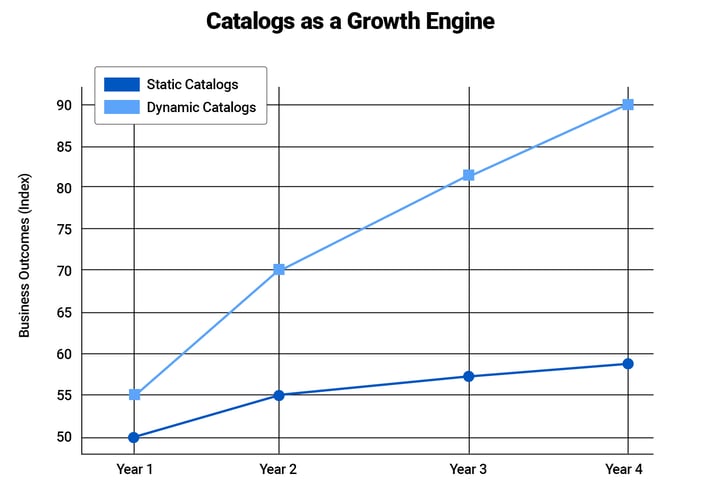
Dynamic catalogs cut error rates, accelerate update speeds, and boost ROI by giving every stakeholder access to the same, accurate data. This shift transforms catalogs from executional paperwork into engines of strategy.
Data Accuracy and Standardization: The Foundation of Trust
Data accuracy is not optional in modern retail — it’s the baseline for trust. In category management, one incorrect SKU attribute can cascade into missed purchase orders or mismatched inventory. For Ecommerce, one broken link between product images and SKUs can tank a campaign.
Dynamic catalogs address this through data governance and data standardization. PIM ensures attributes are clean and searchable. MDM eliminates duplication so every product has one authoritative record. DAM ensures every SKU is tied to the right images and videos.
Together, these create a single source of truth that enables growth and margin protection.
How PIM, MDM, and DAM Make Catalogs Smarter
-
PIM: Powers product discoverability. Buyers in apparel can filter assortments by size, color, and season instantly.
-
MDM: Maintains integrity across systems. A retailer selling both softline and hardline goods can trust their data is consistent across every channel.
-
DAM: Ensures asset accuracy. From lifestyle images to 3D renders, every SKU carries the correct visual identity.
The result is catalogs that don’t just hold data, but unlock strategy across the merchandising value chain.
Catalogs as Strategy in Action
-
Nike uses DAM-integrated catalogs to align global launches. Every product drop is backed by consistent imagery and SKU data.
-
Target relies on MDM to govern supplier input across tens of thousands of SKUs, preventing costly errors in its assortment.
-
Procter & Gamble (CPG) accelerates product development cycles with governed catalogs that cut time to shelf.
-
Sephora refreshes assortments quickly through PIM + DAM, ensuring accuracy across Ecommerce and in-store experiences.
Their commonality? They treat catalogs as a strategic growth lever, not an administrative burden.
Turning Catalogs into a Growth Engine
When catalogs are dynamic, they become growth engines. Decisions are faster. Collaboration between retailers and suppliers becomes seamless. Teams gain back time to focus on strategy rather than rework.
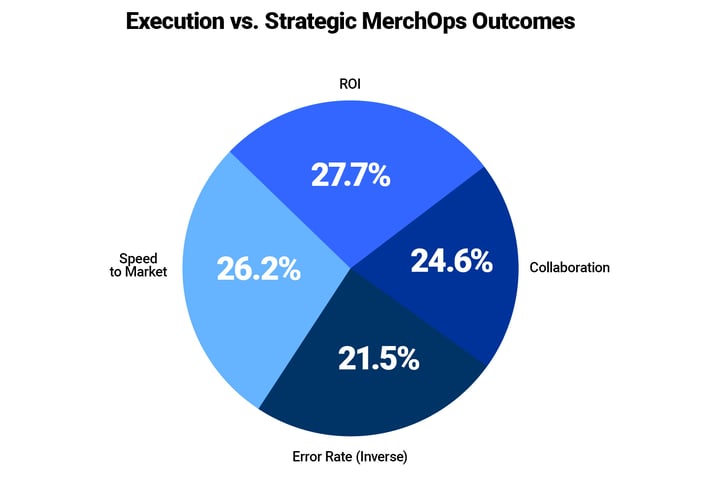
Over time, the compounding effect of clean data, faster workflows, and aligned teams shows up in revenue, ROI, and customer loyalty.
The Human Impact of Dynamic Catalogs
Behind every catalog transformation is a person whose job improves:
-
A category manager who can finally forecast with confidence.
-
A supplier who knows their RFQs will match the retailer’s PO expectations.
-
A buyer who can select assortments with full data clarity and accurate visuals.
Dynamic catalogs don’t just save time — they restore creativity and strategic focus.
From Catalog Management to Category Leadership
By unifying systems and data, catalogs stop being a tactical tool and become a path to category leadership. Accurate, standardized catalogs allow merchandising teams to shift from firefighting to forecasting.
👉 Related blog: Measuring What Matters: The Key Metrics for Catalog Success
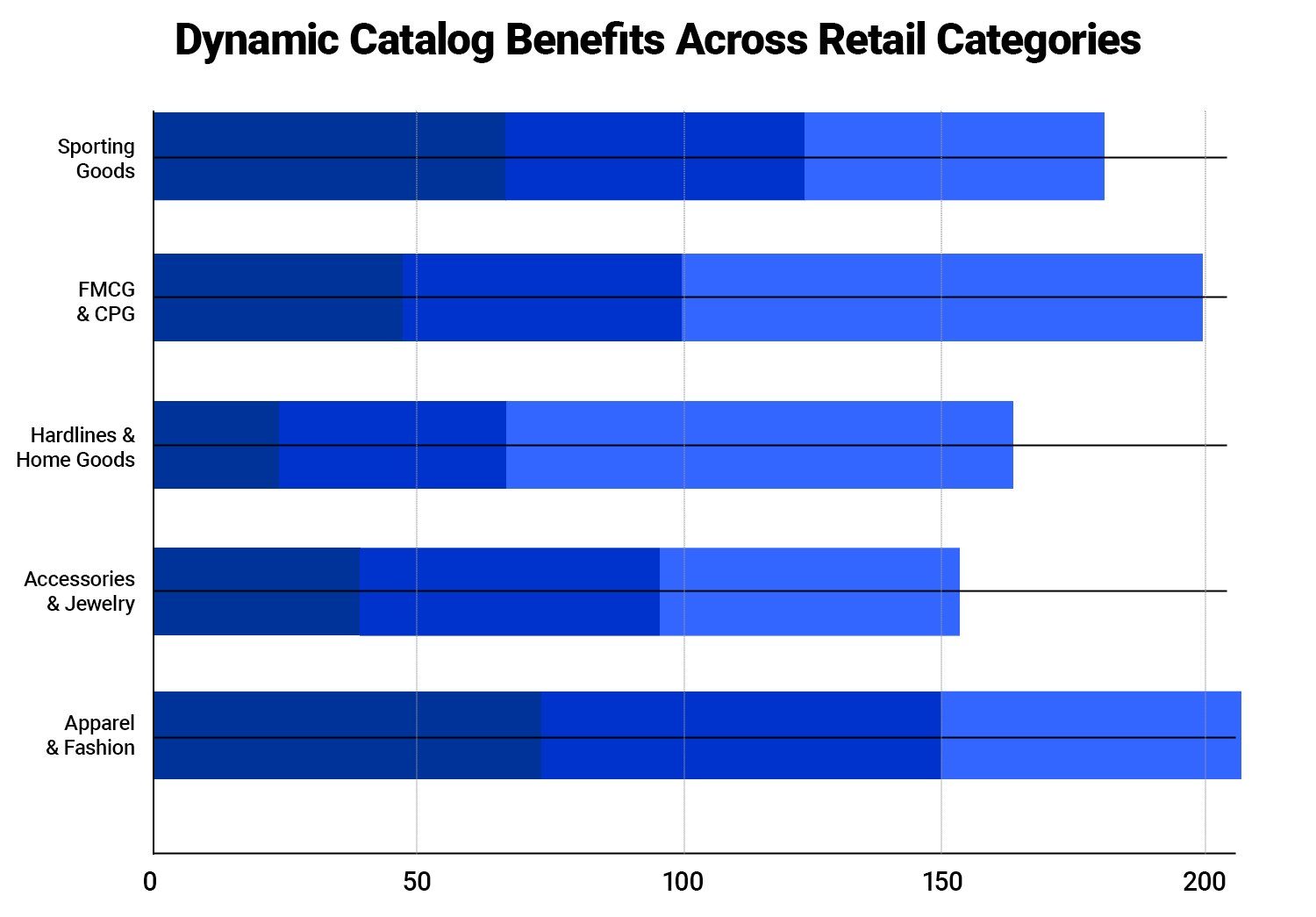
The impact of dynamic catalogs spans every vertical. Every segment benefits when catalogs evolve from static to dynamic.
The Future of Catalogs in MerchOps
Tomorrow’s catalog is not a PDF. It’s a live hub for collaboration, integrated across PLM, PIM, DAM, CRM, and sourcing tools. Retailers and suppliers who adopt dynamic catalogs will lead the next wave of growth. Those who don’t will find themselves buried under outdated spreadsheets while competitors sprint ahead.
The catalog has always been the backbone of merchandising.
Further Reading
The Complete Guide to Strategic Merchandising Operations (MerchOps)
The New Rules of Fashion Merchandising
Sell Using Strategy, Not Just Execution
Measuring What Matters: The Key Metrics for Catalog Success
The Complete Guide to Visual Merchandising and Assortment Planning
References
- Unifyze (2025) Global Retailer Saves $2M Annually with Integrated PIM-DAM
- Comsoft (2025) Using PIM and DAM to Supercharge Retail Marketing Automation
- PIM Core (2024) PLM is Essential for Retail & eCommerce Success
- Censhare (2025) Why Integrated MRM, DAM & PIM Matter in Retail
- Centric Software (2025) PIM vs DAM
- Softtek (2025) Supermarket increases eCommerce orders by 30%
- Catsy (2025) Shopify Catalog Chaos?
