

Share this
by Surefront on Aug 28, 2025, 11:35:19 AM
Home > Blog > Modern Merchandising Platforms Empower Every Role
Table of Contents
- The Merchandiser
- The Designer
- The Buyer
- The Sourcing Manager
- The Team
- Real-World Brand Transformations
- The Payoff

The Merchandiser: From Firefighting to Leading Strategy
Fashion merchandisers sit at the crossroads of creativity and commercial strategy. Yet most of them aren’t strategizing—they’re firefighting. Research across the retail industry shows merchandisers lose up to 12 hours per week just chasing updates across spreadsheets, PowerPoint decks, and email chains. That’s 12 hours that could have been spent analyzing margins, refining assortments, or testing new trends in apparel, jewelry, or home goods.
Modern merchandising platforms eliminate this waste. Instead of stitching together files from sourcing and buyer teams, merchandisers start their day with a single source of truth: a dashboard that surfaces pending approvals, vendor updates, and risk alerts. The outcome? Merchandisers finally lead strategy rather than react to problems.
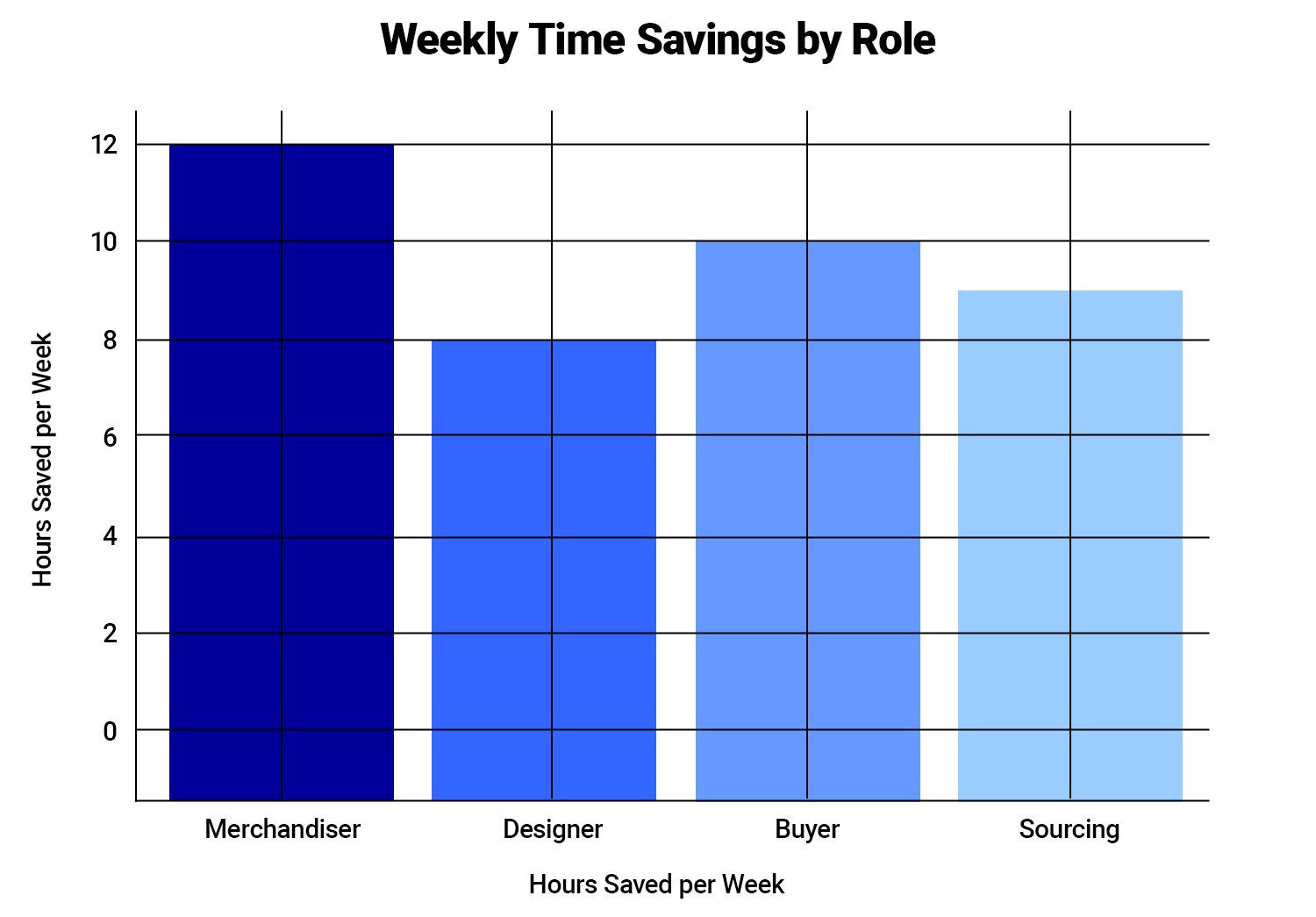
Merchandisers, designers, buyers, and sourcing managers each reclaim 8–12 hours a week that were previously lost to manual updates, disconnected files, and redundant reviews. That’s time refocused on strategy, creativity, and growth.
The Designer: Protecting Creativity Without Losing Control
Designers are hired to create. Yet, in too many organizations, they spend just as much time duplicating data as sketching new ideas. Uploading swatches, renaming trims, and manually carrying over styles from one season to the next are all repetitive tasks that siphon off creativity.
With modern merchandising software, designers don’t just upload files—they connect them directly to the SKUs they reference. Every update is logged, tracked, and visible to merchandisers, buyers, and sourcing managers. This creates data governance and accountability while giving designers back their time to focus on creative direction.
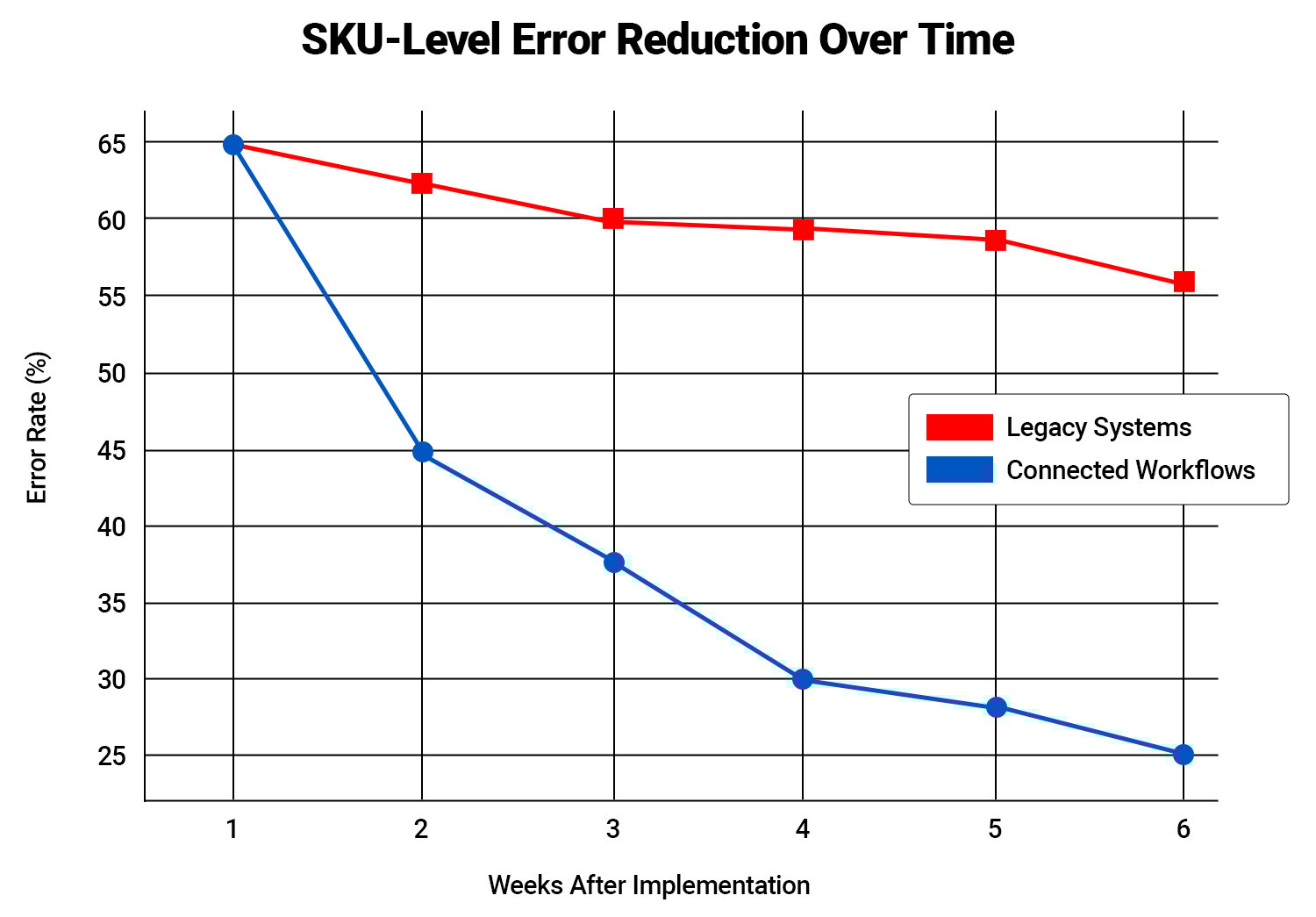
Disconnected workflows make it worse. 65% of SKU mistakes in fashion trace back to version-control problems. Swatches uploaded in the wrong place, specs lost in translation, or multiple “final” versions of the same product file.
The Buyer: Clearer Input, Faster Decisions
Buyers need visibility into assortments, but in legacy workflows, their input often arrives too late. Feedback comes in scattered emails or delayed review meetings, costing teams precious time-to-market. On average, disconnected feedback adds three extra SKU iteration rounds before products are approved.
With structured collaboration, buyer comments live directly next to the SKUs they reference. The entire team sees the feedback in context, in real time. This reduces friction, accelerates approvals, and ensures assortments hit stores while trends are still hot, whether it’s fast-moving accessories or seasonal consumer packaged goods (CPG).
The Sourcing Manager: Smarter Quotes, Stronger Margins
For sourcing managers, accuracy is everything. Yet vendor quotes are often handled through spreadsheets or email attachments—a process that creates 22% of vendor-related errors, from incorrect MOQs to overlooked cost changes.
Smarter merchandising platforms solve this with real-time quote sheets. Vendors enter data directly into the system, comparisons happen side by side, and margin alerts flag issues before they escalate. This gives sourcing leaders leverage in negotiations and shields the business from hidden margin risks.
The Team: One Workflow, One Source of Truth
When merchandisers, designers, buyers, and sourcing managers operate in silos, results are predictable: missed updates, duplicated work, margin surprises. Teams end up working harder, not smarter.
Connected workflows unify every role in a single operating system. Line review times shrink by up to 40%, SKU-level errors fall by nearly a third, and purchase orders move through approvals days faster.
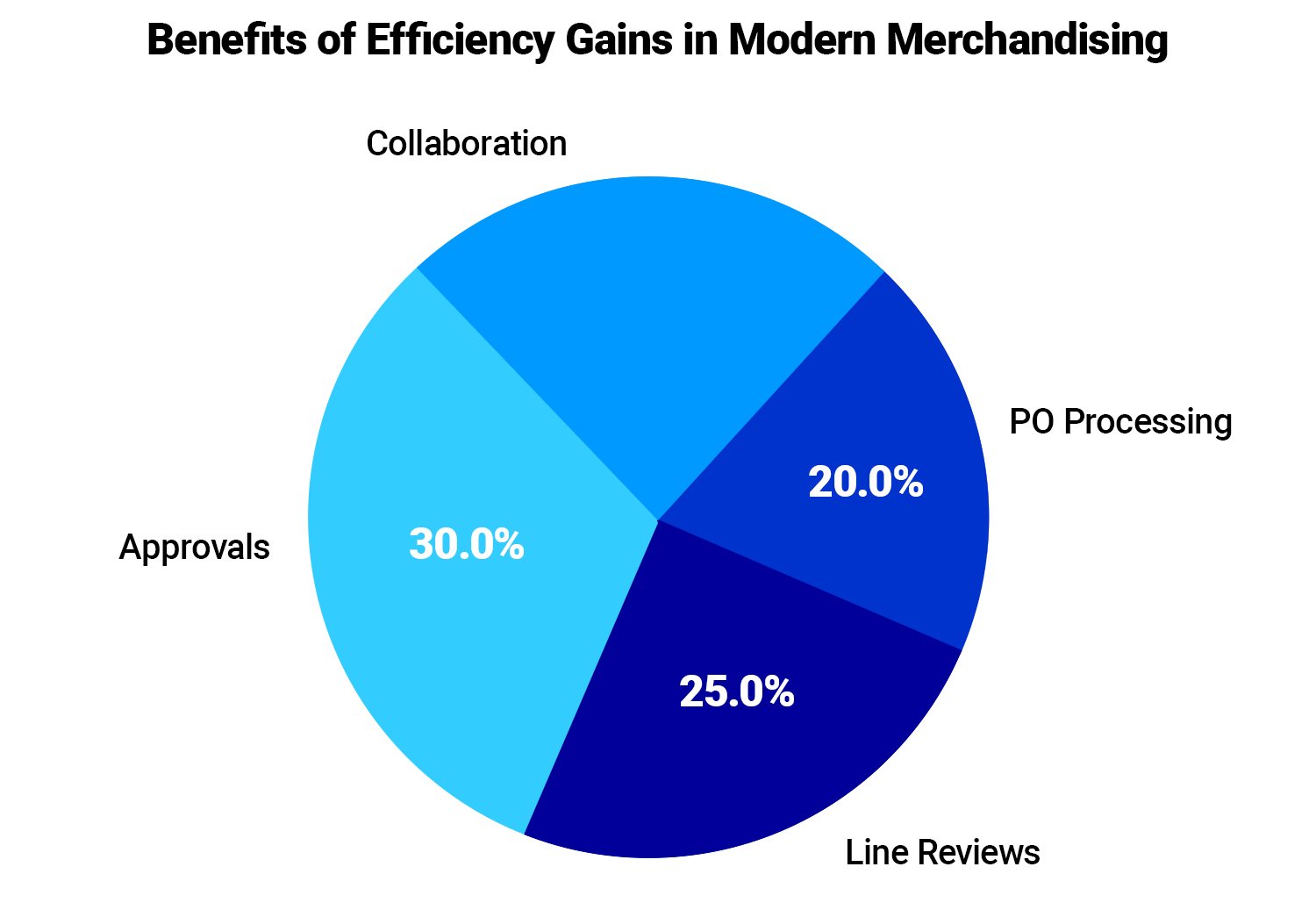
Efficiency gains don’t come from one fix—they come from across the workflow. Teams see 30% faster approvals, 25% shorter line reviews, 20% smoother PO processing, and 25% stronger collaboration when everything runs on one connected system.
Real-World Brand Transformations
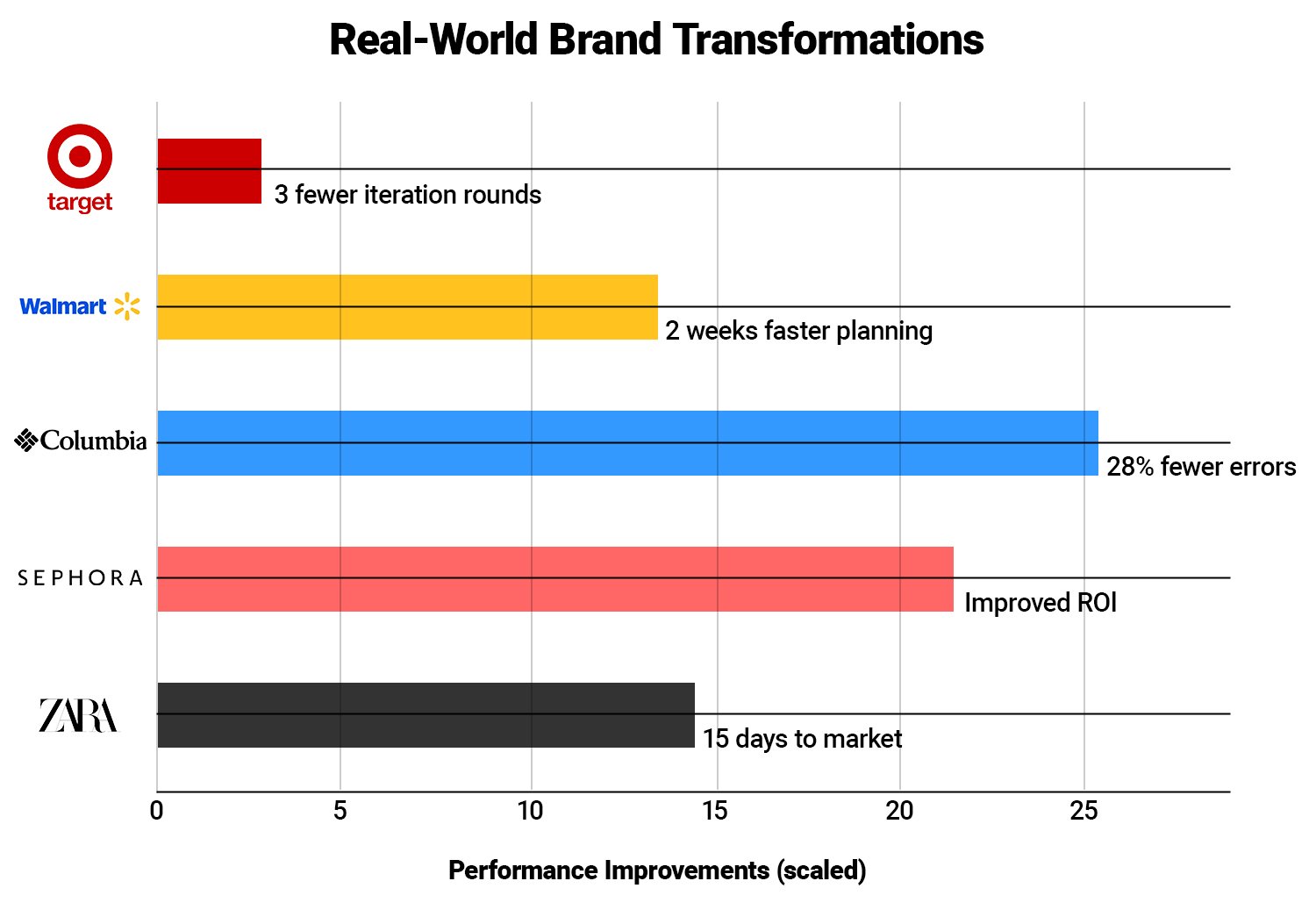
The difference isn’t theoretical. It’s already happening at some of the biggest retailers.





The Payoff: A Team That Moves as One
Modern merchandising is not about digitizing old processes. It’s about reimagining them. Merchandisers stop firefighting, designers protect creativity, buyers accelerate decisions, and sourcing managers negotiate with confidence. Together, they operate as one aligned team.
The future of fashion merchandising belongs to those who unify their workflows. The winners won’t be the brands with the most tools—but the ones with the right system that connects them all.
📘 Download The Complete Guide to Smarter Fashion Merchandising to see how leading retailers are building the next generation of merchandising operations.
Further Reading
What Is Fashion Product Lifecycle Management (PLM)?
Catalog Management Unlocks Hidden Potential
Building a Strong Core: Transforming Your Catalog with PIM
The Ultimate Guide to Line Sheets
