

Share this
by Surefront on Mar 19, 2025, 10:59:28 AM
Home > Blog > PLM Software for Supplier-Retailer Collaboration
Table of Contents
- Why Supplier-Retailer Alignment Matters
- Common Barriers to Effective Collaboration
- What PLM Software Enables for Retail Partnerships
- How Surefront Supports Unified Product Collaboration
- Real-World Examples of Supplier-Retailer Alignment
- Conclusion: Building Stronger Retail Partnerships
- Frequently Asked Questions
- Further Reading
Why Supplier-Retailer Alignment Matters
"Why wasn't I told that earlier?"
If you've heard this phrase in your merchandising conversations, you're experiencing a common pain point. Miscommunication between suppliers and retailers doesn't just delay product launches—it erodes trust, derails timelines, and shrinks margins.
In retail, timing and accuracy determine competitive advantage. Yet most supplier-retailer partnerships still rely on disconnected systems: email threads for negotiations, spreadsheets for product specs, shared drives for assets. The result? Data duplication, version confusion, delayed approvals, and poor visibility across teams.
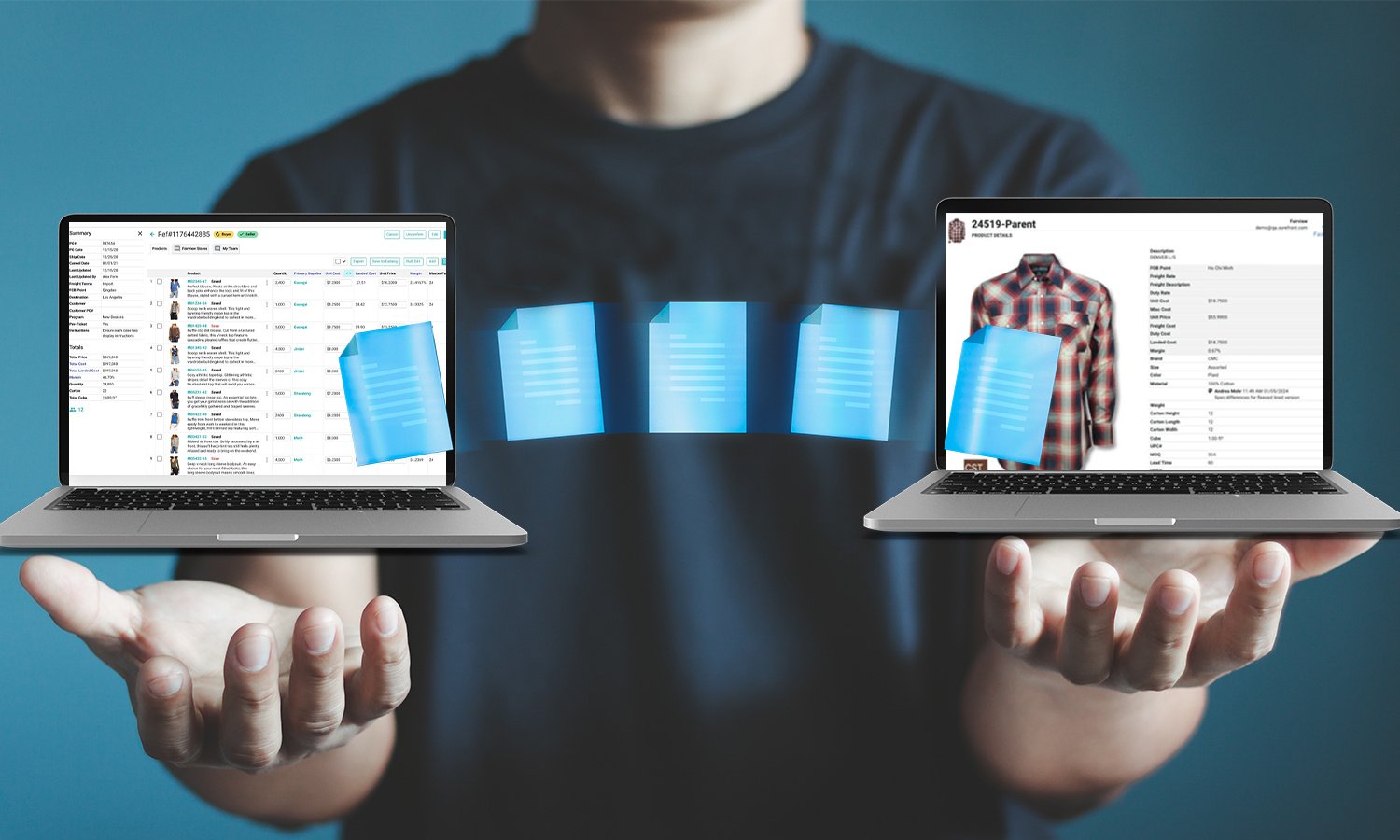
PLM software addresses these gaps by creating a centralized data home where stakeholders can freely share product information and assign access permissions. When suppliers and retailers work from a single source of truth, they move faster, reduce errors, and build stronger partnerships.
Common Barriers to Effective Collaboration
Major suppliers like Nike, Adidas, and Levi's and retailers such as Target, Walmart, and Nordstrom face a shared challenge: managing complex product data across fragmented systems. Without centralized PLM software, critical details—SKUs, pricing, descriptions, compliance documentation, and images—get lost in email chains and version-controlled chaos.
Typical Retail Supply Chain Pain Points
Modern merchandising moves fast. Yet many teams are stuck using:
✅ Email threads for offer negotiations
✅ Spreadsheets for product data
✅ Shared drives for asset storage
These fragmented tools lead to:
❌ Data duplication and version confusion
❌ Delayed approvals
❌ Poor visibility across teams and timelines
According to Deloitte (2023), 78% of retailers cite disconnected communication tools as a major barrier to scaling supplier collaboration.
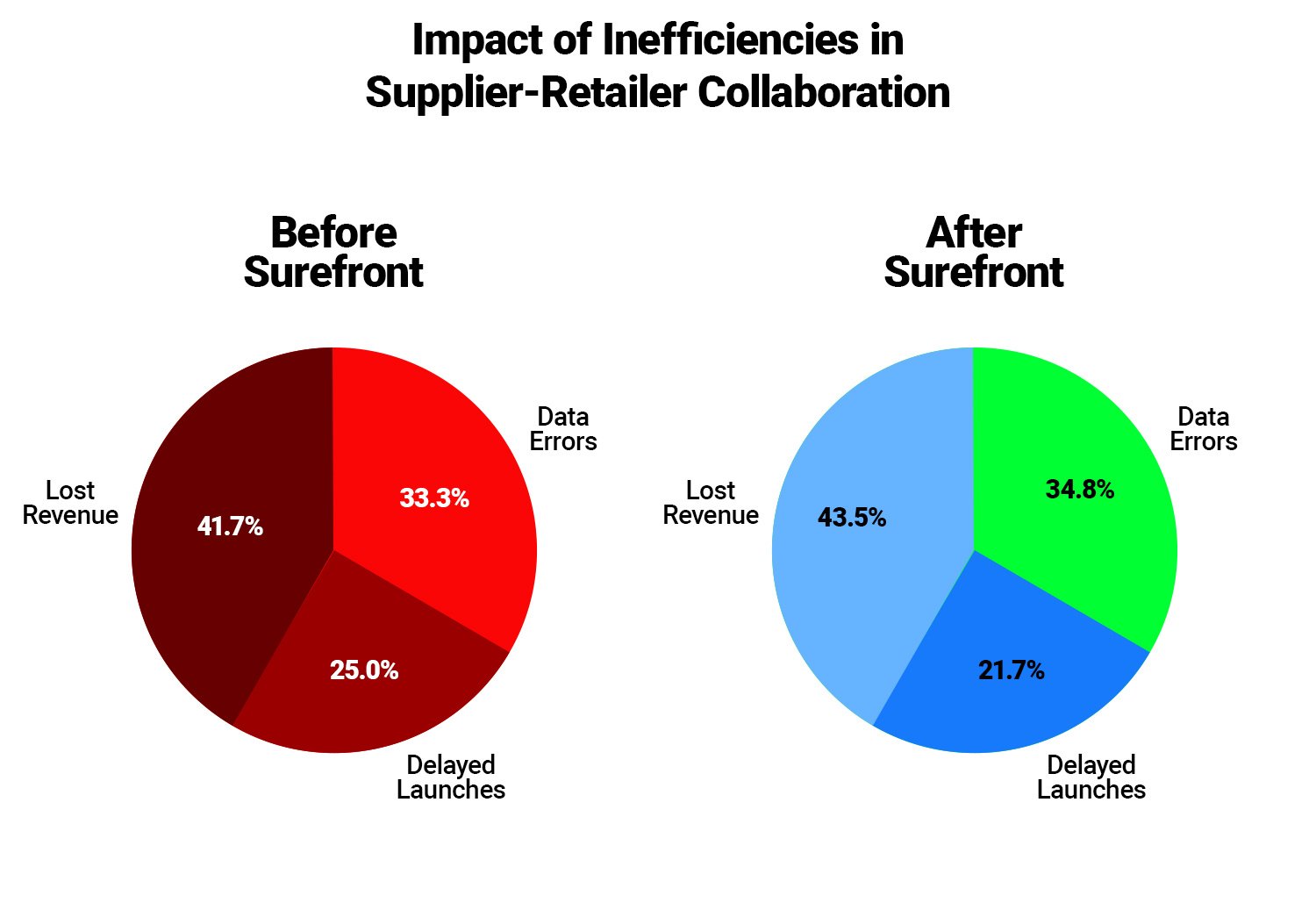
Without PLM software that unifies collaboration, these inefficiencies cost companies millions in lost revenue and wasted time.
What PLM Software Enables for Retail Partnerships
PLM software provides the foundation for structured, data-driven supplier-retailer collaboration. While suppliers and retailers share common goals, they rely on PLM, PIM, and CRM tools differently to achieve success.
How Suppliers Use PLM Software
Suppliers are responsible for designing, manufacturing, and distributing products to retailers. Their biggest challenges lie in managing product development and ensuring accurate product data reaches retailers seamlessly.
PLM: Oversees product creation from ideation through production
PIM: Ensures retailers receive complete, accurate product data across all sales channels
CRM: Tracks interactions with retailers, streamlining communication and order negotiations
How Retailers Use PLM Software
Retailers focus on merchandising, sales, and customer relationships. Their main challenge is managing incoming product data efficiently while ensuring it meets consumer expectations.
PIM: Organizes supplier-provided product data for seamless integration into e-commerce and in-store systems
CRM: Tracks customer purchasing behavior, allowing retailers to refine product offerings
PLM: Supports private-label product development, ensuring quality and compliance standards are met
Modern B2B merchandising success relies on structured, visual, and data-driven collaboration. Here's what effective supplier-retailer partnerships need:
✅ A centralized product hub for all SKUs, images, descriptions, and costs
✅ A live offer negotiation system to avoid back-and-forth emails
✅ Tools that sync workflows across PLM, PIM, and CRM functions
With real-time visibility, both parties can align faster—shortening product lifecycles, increasing sell-in success, and reducing costly errors.
How Surefront Supports Unified Product Collaboration
Surefront is a Unified Product Collaboration Platform with PIM, CRM, and PLM solutions. It's designed to eliminate friction between suppliers and retailers by serving as a centralized data home where stakeholders can freely share product information and assign access permissions.
Centralized Product Data Access
With Surefront's integrated capabilities, teams can:
- Maintain accurate, up-to-date product information
- View attributes, pricing, compliance info, and images in one place
- Customize data views for buyers, developers, and compliance teams
Streamlined Communication in Context
Surefront allows buyers and vendors to:
- Collaborate directly in the context of the product
- Add comments, tag teammates, and track approvals
- View version history of product changes
This isn't just messaging—it's communication with context, connected to the exact SKU or offer being discussed.
Faster Product Development Timelines
Time-to-market is a competitive advantage. With Surefront:
- Product lines are reviewed faster
- Offers are built with visual line sheets in minutes
- Custom pricing is negotiated in-platform
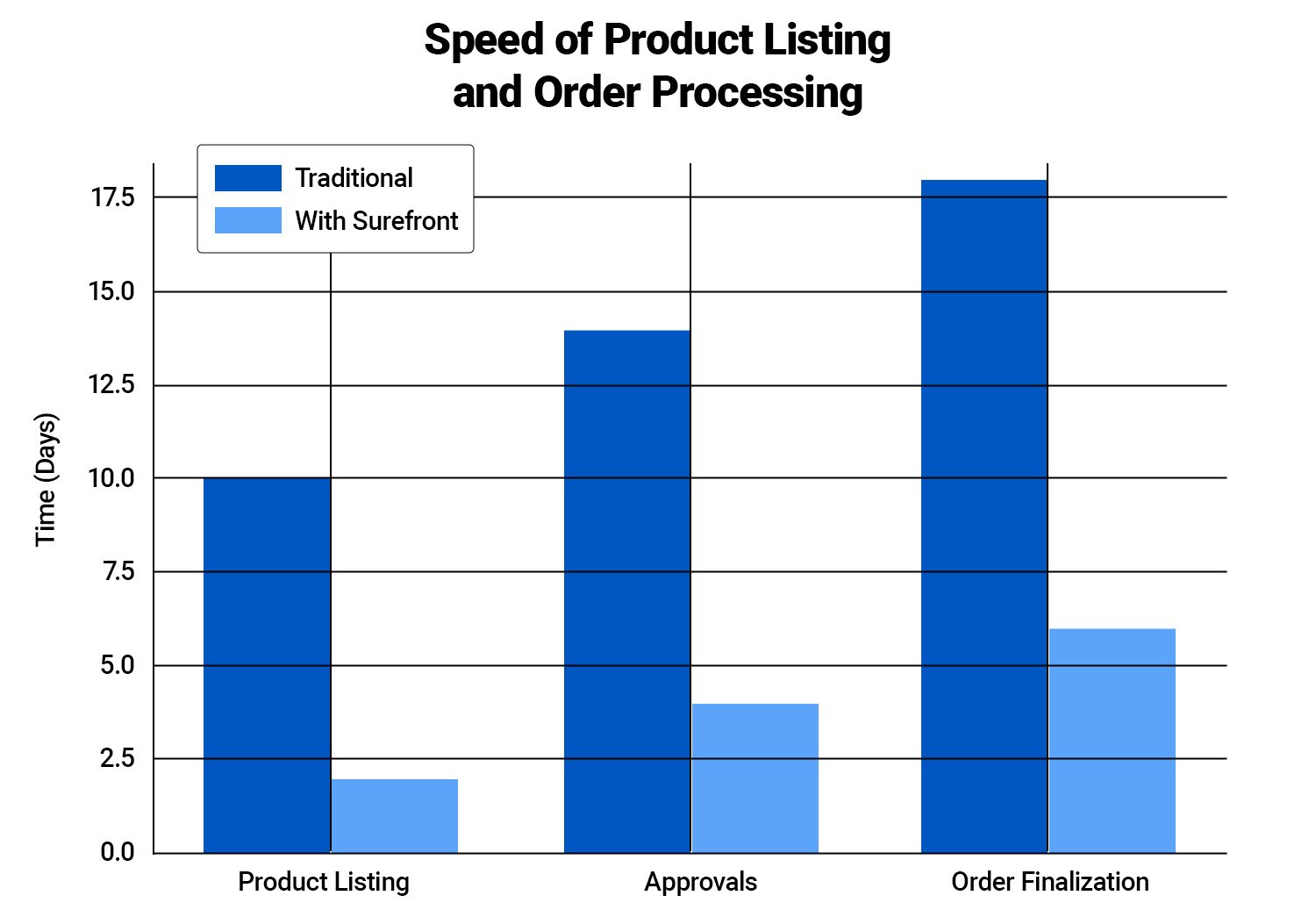
Retailers and suppliers co-create more effectively—aligning goals, reducing rework, and moving from concept to shelf faster than ever before.
Real-World Examples of Supplier-Retailer Alignment
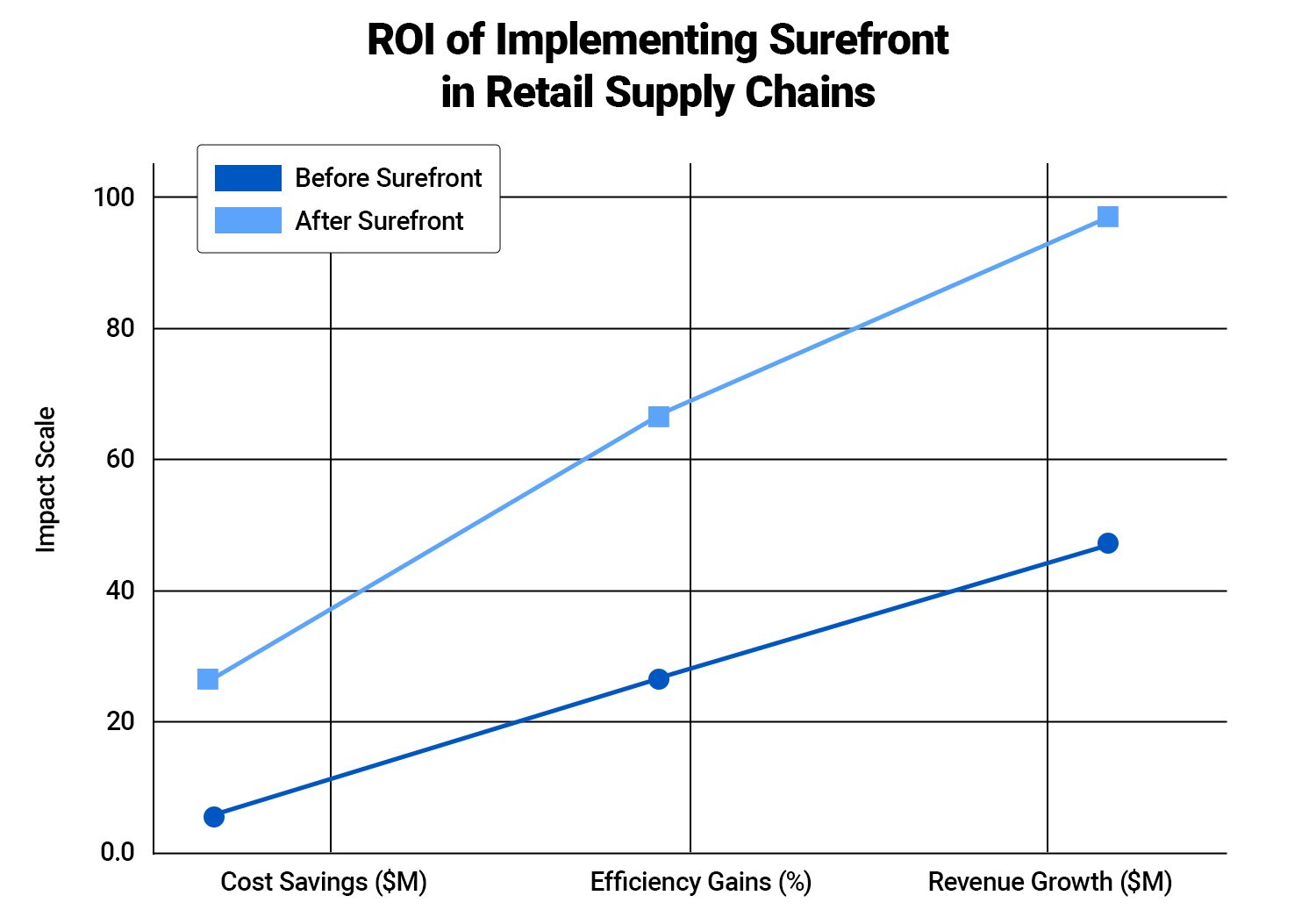
Industry leaders have embraced collaborative platforms to streamline operations and drive revenue growth. Here's how PLM software supports major supplier-retailer partnerships:
Building Stronger Retail Partnerships with PLM Software
In an industry where precision and speed define success, PLM software creates the critical connection between suppliers and retailers. Suppliers develop, refine, and deliver products with accuracy. Retailers select, merchandise, and sell products with confidence. Together, they create a seamless ecosystem—but only when connected through unified collaboration tools.
Surefront is a Unified Product Collaboration Platform with PIM, CRM, and PLM solutions—a centralized data home where stakeholders can freely share product information and assign access permissions.
If you're ready to bridge the gap, streamline collaboration, and power your business forward, it's time to experience Surefront in action.
Ready to transform your supplier-retailer collaboration?
Watch a Surefront Demo Today!
Frequently Asked Questions
What is PLM software?
PLM software (Product Lifecycle Management software) is a system that manages product data and workflows from design through production and distribution. It helps suppliers and retailers collaborate on product development, maintain accurate information, and accelerate time-to-market.
How does PLM software improve supplier-retailer collaboration?
PLM software creates a centralized data home where suppliers and retailers can share product information, track approvals, and communicate in context. This eliminates email back-and-forth, reduces version confusion, and ensures both parties work from the same accurate data.
What's the difference between PLM, PIM, and CRM?
PLM manages product development workflows, PIM organizes product information for distribution across channels, and CRM tracks customer and partner relationships. Unified platforms combine all three to support end-to-end collaboration.
Can PLM software integrate with existing retail systems?
Yes. Modern PLM software is designed to work alongside existing e-commerce, ERP, and merchandising systems, creating a centralized hub while connecting to the tools teams already use.
Who benefits most from PLM software—suppliers or retailers?
Both. Suppliers use PLM software to streamline product development and ensure accurate data delivery. Retailers use it to manage incoming product information, reduce errors, and make faster merchandising decisions. The biggest benefits come when both parties use a unified platform.
Further Reading
Want to go deeper into modern merchandising? Check out these Surefront resources:
Transforming Your Catalog with PIM
The Ultimate Guide to a Perfect Line Sheet
How to Choose and Implement the Best PLM Software
