

Share this
by Surefront on Aug 20, 2025, 1:52:35 PM
Home > Blog > Why Traditional Systems Leave Fashion Merchandisers Behind
Table of Contents
- The High-Stakes World of Merchandising
- Where Legacy Systems Break Down
- The Human Toll of Broken Workflows
- Lessons From the Real World
- The MerchOps Alternative
- The ROI of Connected Merchandising
- Conclusion: Why This Moment Matters

The Hidden Struggle in Fashion Merchandising
What’s the real cost of running fashion merchandising on spreadsheets in 2025? The numbers don’t tell the full story. It’s not just about wasted hours or incremental errors—it’s about missed windows, stalled approvals, and lost momentum in an industry that thrives on speed. Every season, buyers scramble to reconcile quotes buried in email chains, planners tweak versions of outdated decks, and designers wait for sign-offs that never seem to come. By the time all the noise has settled, the competition has already moved.
The uncomfortable truth is that fashion merchandisers are being asked to do today’s work with yesterday’s tools. Excel, PowerPoint, and clunky PLMs built for other industries were never designed for the dynamic, visual, and consumer-driven nature of retail. Yet these piecemeal systems remain the default. The cracks aren’t just showing—they’re widening into chasms.
It's a High-Stakes World
Merchandising has always been a balancing act: art on one side, commerce on the other. A missed assortment call can leave racks overflowing with unsold stock. An approval delayed by a week can kill a trend before it ever reaches the floor. A misstep in vendor communication can add weeks to a launch timeline, undermining both revenue and brand reputation.
This isn’t unique to apparel. The stakes are just as high across hard lines, soft lines, home goods, and consumer packaged goods. Whether it’s a category manager at a global retailer sourcing seasonal jewelry, or a divisional manager in charge of consumables, merchandising decisions directly shape margin protection, comp growth, and brand identity. And when the systems behind these decisions fail, the ripple effects can stall entire businesses.
Where Legacy Systems Break Down
Ask any merchandiser where the pain begins, and the answers are remarkably consistent. Traditional PLMs, often borrowed from aerospace or automotive, offer rigid forms but no flexibility. They weren’t built for seasonal cycles or consumer-driven pivots, so fashion teams end up working around them instead of with them.
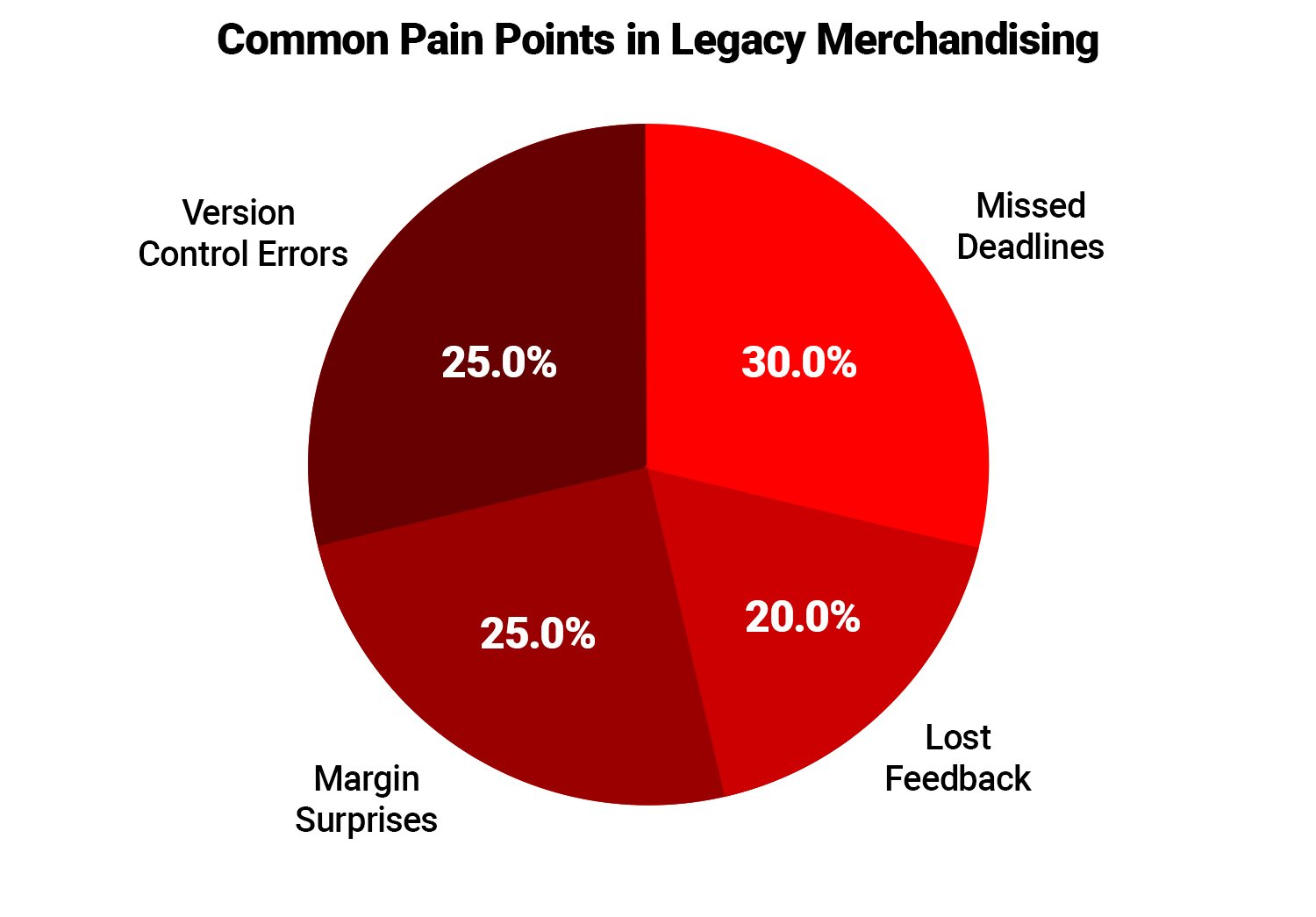
Then there’s the spreadsheet problem. Line planning still lives in bloated Excel grids and endless PowerPoint decks. Countless hours go into formatting rather than strategy, and every version update introduces another chance for SKU mismatches or margin errors. It’s not unusual for three teams to be working off three different “final” versions of the same file.
Finally, there’s the email tax. Critical decisions, vendor feedback, and approvals vanish into endless threads. By the time a decision surfaces, deadlines have already slipped. What feels like a minor delay at the SKU level compounds downstream, stretching into weeks or even months of lost market opportunity.
Outdated Systems, Outdated Results
Legacy PLM and spreadsheet-based workflows weren’t built for collaboration. Instead, they silo teams and create a constant cycle of rework. A buyer may approve a SKU in a deck, only to find that the designer has already updated the product spec in a separate system. By the time sourcing negotiates margins, key details are already out of sync.
This lack of connection creates the perfect storm: missed deadlines, duplicated effort, and shrinking margins. In an industry where weeks, or even days make the difference between trend adoption and markdowns, the cost of delay is massive.
The Human Toll of Broken Workflows
Behind every missed deadline or SKU mismatch is a human story. Buyers find themselves working late nights chasing down updates instead of shaping assortments. Designers lose momentum when their concepts stall in review. Planners burn out from reconciling rework rather than guiding strategy.
This isn’t just about operational inefficiency—it’s about creativity and morale. Merchandisers thrive on making the right calls at the right time, but when tools slow them down, it chips away at confidence. Over time, that erosion of trust in process becomes an erosion of trust in teams.
The Domino Effect of Disconnection
Disconnection doesn’t just slow down processes; it erodes trust across the entire supply chain. When teams don’t have confidence in the data, they hesitate to make decisions. That hesitation leads to lost speed-to-market, a drop in agility, and ultimately missed revenue.
Consider a seasonal assortment plan. If every stakeholder is working off a different version of the truth, approvals drag on and opportunities vanish. By the time the collection is ready, the market has already moved.
Lessons From the Real World
The evidence is everywhere. At Levi’s, vendor quotes once lived in scattered Excel sheets, leading to frequent errors in purchase orders. After centralizing the process, corrections dropped by nearly a third. At Target, line reviews that once dragged on for weeks were streamlined, cutting multiple iteration rounds per SKU. Columbia Sportswear reported a 28% reduction in SKU-level errors once they abandoned decks and email in favor of a centralized planning model.
These aren’t isolated wins—they’re proof that modern merchandising needs modern workflows. The difference between working in survival mode and working strategically often comes down to the tools teams use every single day.



The MerchOps Alternative
That’s where MerchOps comes in. It isn’t just another software layer—it’s a new operating model. MerchOps replaces scattered spreadsheets with visual line planning, transforms disjointed email feedback into live product-linked comments, and provides a shared workspace where every stakeholder works from the same source of truth.
Instead of being reactive, teams can be proactive. Decisions happen in context, not in silos. Feedback ties directly to products, not to PowerPoint slides. Knowledge is carried forward season to season, even as teams evolve. In short, MerchOps creates the conditions for merchandisers to reclaim their time, sharpen their decision-making, and drive growth instead of firefighting.
The ROI of Connected Merchandising
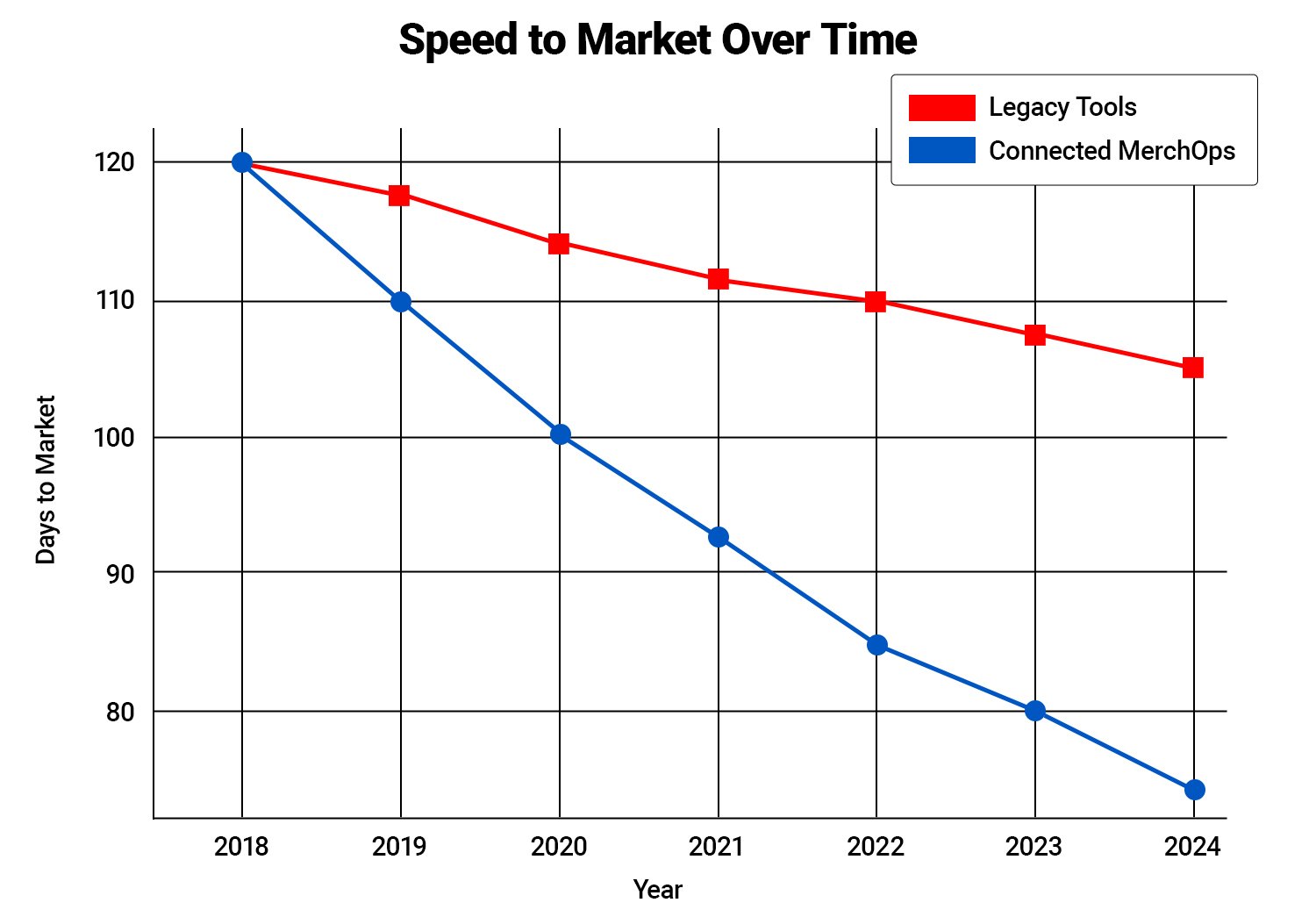
The value isn’t abstract—it’s measurable. Nike cut nearly two weeks from its seasonal calendar by adopting an integrated workspace. Zara sharpened its margins by overlaying real-time sales data into merchandising decisions, rather than waiting for post-season recaps. Columbia and Gap Inc. both proved how standardized, connected processes reduce errors and safeguard institutional knowledge.
Speed to market, higher margins, fewer mistakes, and future-proofed workflows—these aren’t perks. They’re table stakes for modern merchandising.
Merchandising is More Complex Than Ever
Today’s merchandising environment is more demanding than ever. Retailers balance global supply chains, rising costs, sustainability requirements, and shifting consumer expectations. Meanwhile, assortments themselves are expanding: more SKUs, more variations, and shorter product lifecycles.
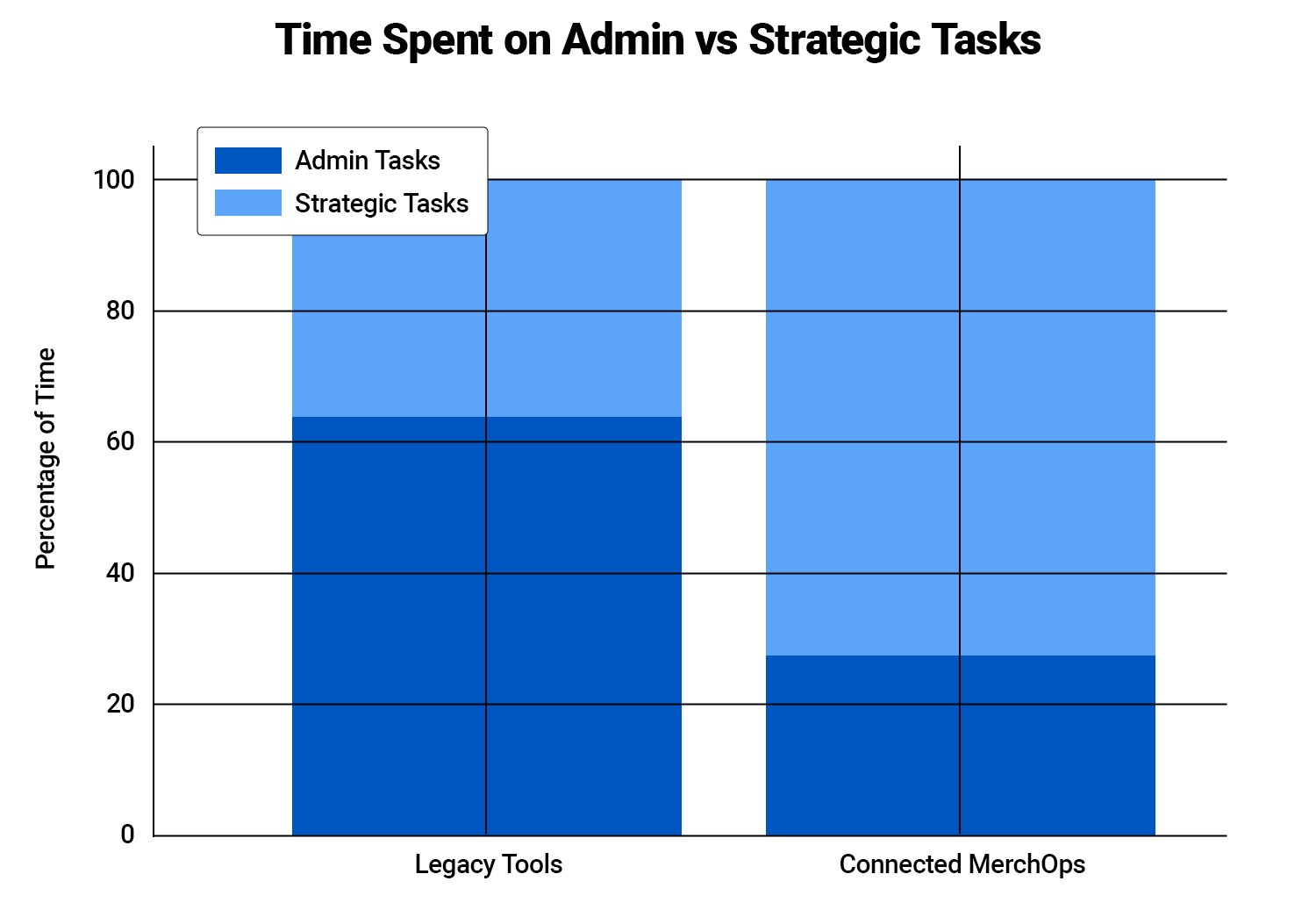
Traditional tools simply can’t keep up. What worked when assortments were smaller and timelines longer now creates bottlenecks at scale. Instead of enabling creativity and speed, these tools weigh teams down with admin work.
Why a New Model Is Emerging
Leading brands are beginning to rethink merchandising as a connected operation—MerchOps. Unlike legacy PLM, MerchOps isn’t just about tracking products; it’s about unifying people, processes, and decisions in one shared workflow.
By bringing line planning, quotes, approvals, and buyer feedback into one place, MerchOps transforms merchandising from survival mode into strategy. Decisions are faster, collaboration is stronger, and outcomes are measurable.
Conclusion: Why This Moment Matters
Fashion merchandising has always been about timing. And right now, timing is everything. With trends moving faster, margins tighter, and consumer attention fragmented, the industry can’t afford to let outdated tools drag it backward.
For merchandisers, the choice is no longer whether to modernize workflows—it’s whether they’ll do it before their competition does.
📘 Download The Complete Guide to Smarter Fashion Merchandising to see how leading retailers are building the next generation of merchandising operations.
Further Reading
What is Fashion Product Lifecycle Management (PLM)
The Ultimate Guide to a Perfect Line Sheet
Transforming Your Catalog Management with PIM
