

Share this
by Surefront on Sep 25, 2025, 4:21:29 PM
Home > Blog > The New Rules of Fashion Merchandising
Table of Contents
- Why the Old Rules No Longer Work
- From Stocking Shelves to Shaping Markets
- From Gut Feel to Data-Driven Merchandising
- Omnichannel as the Default
- The High Stakes of Standing Still
- Brands That Lead, Markets That Follow
- Surefront’s MerchOps Advantage

Why the Old Rules No Longer Work
Not long ago, fashion merchandising was steady and predictable. Buyers built assortments twice a year, planners compared numbers in spreadsheets, and executives reviewed sales reports months after the fact. The pace of retail allowed for this. Trends unfolded over seasons, competition was mostly local, and the industry’s toolkit of calendars, wholesale reports, and gut instinct was good enough.
That world has vanished.
Today, consumer behavior shifts in days, not months. A TikTok post can make a niche product go viral overnight. Competitors can pivot faster than you can launch your seasonal review. Customers now expect the same seamless experience whether they are scrolling Instagram, opening a mobile app, or walking into a flagship store.
The rules of fashion merchandising have changed. Brands that cling to old methods risk unsold inventory, shrinking margins, and customer disappointment. Those that adapt to the new rules—predictive, omnichannel, data-driven merchandising—will not just survive, but thrive.
From Stocking Shelves to Shaping Markets
For decades, merchandising was treated as a support function. The role was simple: track SKUs, execute seasonal plans, and respond to last season’s sales. It was reactive by design.
But modern merchandising is no longer about keeping shelves full. It is about shaping what customers want, when they want it, and how they experience your brand. The most successful retailers now treat merchandising as a growth engine that blends creative vision with strategic foresight.
Take Uniqlo. Its focus on timeless basics and global consistency makes the brand resilient in volatile markets. In contrast, LVMH thrives on fast-evolving assortments, building exclusivity through cultural relevance and prestige. Both brands couldn’t be more different in execution, but they share one principle: merchandising is not about reacting, it is about leading.
From Gut Feel to Data-Driven Merchandising
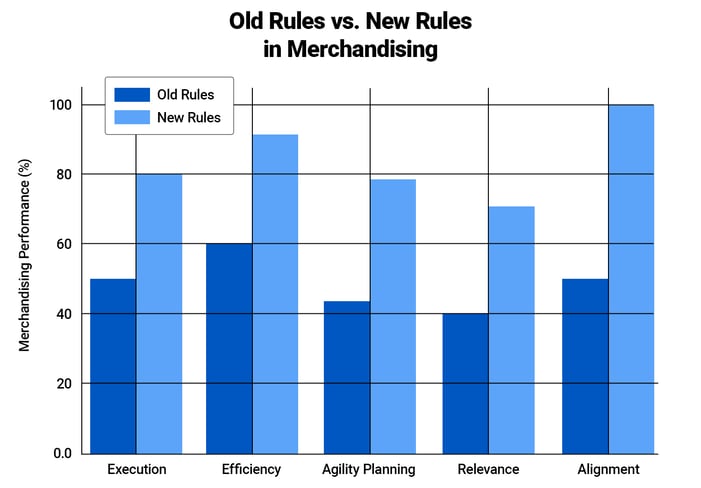
Once, intuition was the merchandiser’s most trusted tool. Buyers relied on gut instinct, while planners spent hours manually updating spreadsheets. That worked when change was slow. In today’s fast-moving retail environment, instinct alone has become a liability.
Modern merchandising relies on data as the backbone of creativity. Predictive analytics surface demand before it peaks. Real-time signals, from search trends and transactions to weather patterns, shape decisions in the moment. Localization allows assortments to feel relevant across regions without sacrificing efficiency.
Omnichannel as the Default
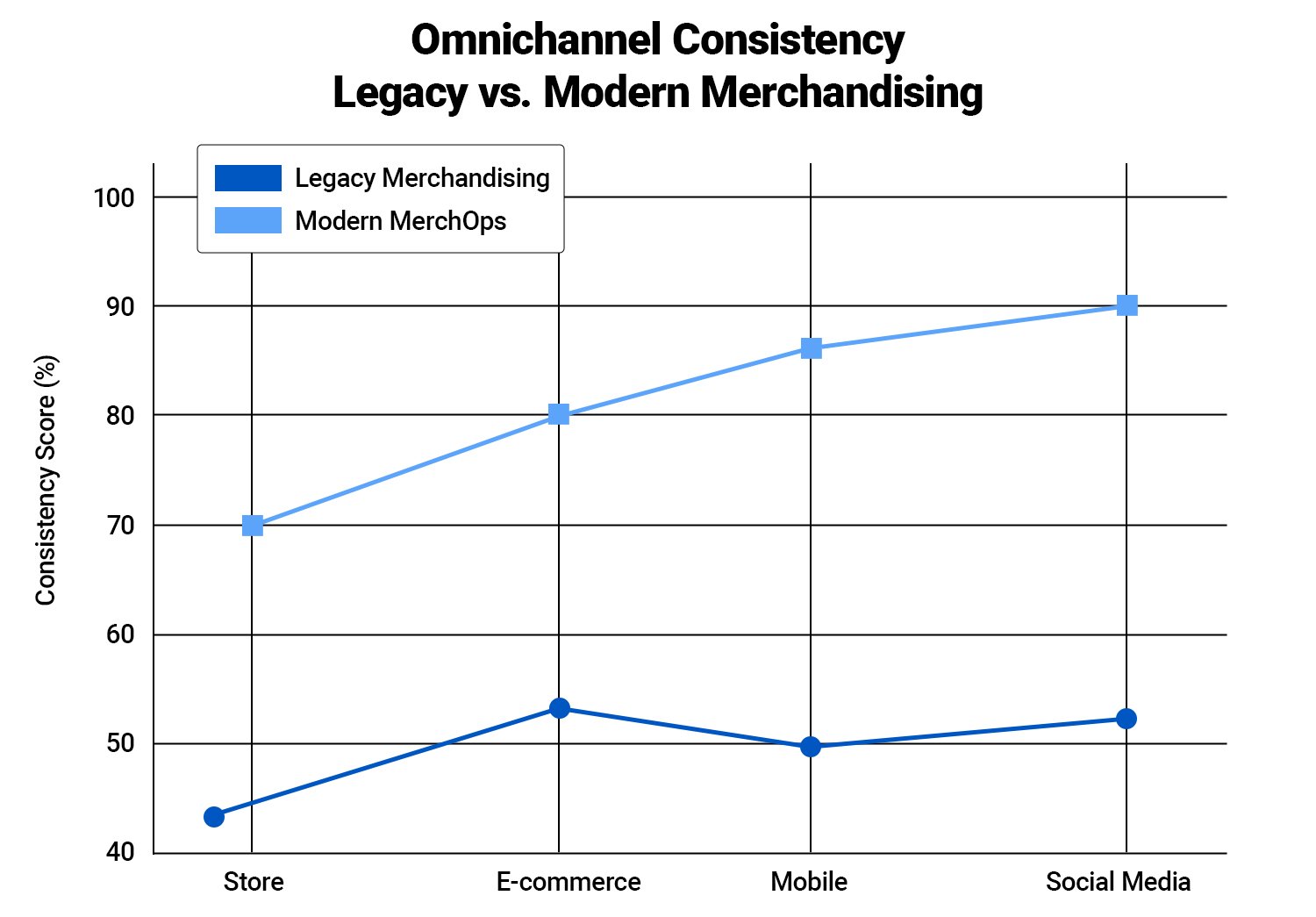
Consumers no longer distinguish between “online” and “offline.” They expect a consistent brand experience across every touchpoint, whether that is a mobile app, an e-commerce site, or a physical store. Omnichannel is no longer a strategy; it is the baseline expectation.
Target offers a clear example. Their seasonal collections tell a unified story across social media, digital platforms, and physical shelves. A customer scrolling Instagram, browsing the Target app, or walking into a store sees the same collection, styled the same way. That cohesion builds trust and strengthens loyalty.
The High Stakes of Standing Still
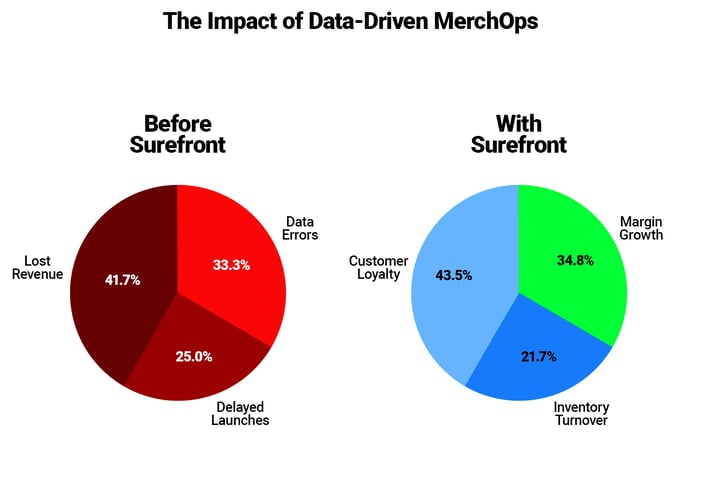
The risks of clinging to old methods are stark. Unsold inventory ties up cash and forces costly markdowns. Slow reactions leave you chasing competitors instead of leading markets. Disconnected systems create silos and errors that ripple across entire organizations.
By contrast, the upside of smarter merchandising is measurable and transformative. Retailers that embrace modern MerchOps—predictive, collaborative, and visual-first operations—consistently outperform those that don’t.
Brands That Lead, Markets That Follow
If there is any doubt about the power of modern merchandising, look to the brands that set the pace of their industries.
Nike turns product launches into cultural events, tying limited-edition sneakers to championship wins or collaborations. These drops do not just move inventory, they create demand across the entire industry.
Patagonia embeds values directly into its assortment strategy, limiting SKUs and emphasizing durability to reinforce its mission of sustainability.
Zara transformed the speed of retail itself, compressing design-to-store cycles into weeks and training customers to return often.
Shein leverages real-time data to launch thousands of SKUs weekly, scaling instantly when products resonate.
These companies could not be more different in purpose and positioning, but they share the same truth: merchandising is not just a function, it is the strategy that defines categories.
_Page_01.png?width=512&height=396&name=The%20Complete%20Guide%20to%20Strategic%20Merchandising%20Operations%20(MerchOps)_Page_01.png)
Surefront’s MerchOps Advantage
Traditional PLM and ERP systems were not built for this reality. They rely on static SKU tables, manual uploads, and endless email chains. They fragment communication instead of unifying it.
Surefront’s MerchOps platform closes that gap by giving retailers and brands the tools they need to move at the pace of modern retail. With Surefront, teams can:
-
Plan visually, making assortments clear and collaborative.
-
Work from one unified source of truth for all product data.
-
Forecast proactively using predictive analytics.
-
Communicate in real time instead of relying on long email chains or spreadsheets.
What was once reserved for industry giants like Nike, Target, and Patagonia is now available to every retailer. With Surefront, merchandising teams can finally work the way they have always wanted: faster, clearer, and smarter.
Further Reading
Why Traditional Systems Leave Fashion Merchandisers Behind
The Complete Guide to Visual Merchandising & Assortment Planning
MerchOps is The Future of Fashion Merchandising
Transforming Your Catalog with PIM
Evolve Your Product Catalog into a Powerful Tool for Growth
The Complete Guide to Smarter Fashion Merchandising Workflows
References
- McKinsey & Company (2025) What is fast fashion and why is it a problem?
- Legit Check (2025) Fast Fashion Industry Statistics Report 2025
- UniformMarket (2025) Fast Fashion Statistics 2025
- Retail Dive (2024) Target scales back on in-store fulfillment strategy
- Designveloper (2025) Nike: A Case Study of Modern Commerce
- Thomas (2025) Zara Supply Chain Taps into Top Trends
- Patagonia (2023) Our Environmental & Social Responsibility
- Gartner (2024) Market Guide for Retail Assortment Management
- Shein (2024). Our On-Demand Business Model
- Centric (2023). 5 Challenges Fashion and Apparel Manufacturers Will Face
