

Share this
by Surefront on Oct 3, 2025, 1:34:21 PM
Home > Blog > Future Proofing MerchOps Workflows for the Next Era of Retail
Table of Contents
MerchOps as the Missing System
What We Measure Defines What We Achieve
From Reaction to Prediction
The Human Side of Future Proofing
The Retail Gap Widens
Future Proofing With MerchOps
The Next Era Belongs to MerchOps

The End of Business as Usual
Retail has always been defined by cycles. Buyers plan assortments, suppliers fulfill orders, stores reset displays, and finance tallies the results. For decades, this rhythm went largely unchanged. But those cycles no longer fit the pace of today’s retail industry. Fashion, FMCG, home goods, and even sporting goods now move at the speed of culture.
This is where the MerchOps movement comes in. It is not simply about cleaning up spreadsheets or centralizing quote sheets and POs. MerchOps is about reimagining the workflows that drive retail growth, turning merchandising from execution into strategy, and giving teams the tools to future proof their success.
MerchOps as the Missing System
Every other function in the enterprise has had its system moment. CRM redefined sales. ERP revolutionized operations. But merchandising, the very heartbeat of retail, has been left behind. Teams have scrambled across siloed PLM tools, disconnected PIMs, ad hoc DAMs, and unending email threads.
The result is lost speed, inaccurate data, suppliers and retailers working at cross purposes, and decisions made too late to matter.
MerchOps closes this gap. It is the discipline and platform that unites product information, supplier collaboration, catalog management, and data governance into a single source of truth. It gives merchandising the same infrastructure support as sales, finance, and operations, finally putting it on equal footing in the digital enterprise.
What We Measure Defines What We Achieve
For years, merchandising was judged by sell-through rates, markdown percentages, or seasonal revenue. Useful, but backward looking. The future of MerchOps measurement is not only about outcomes, it is about the decisions and workflows that lead to those outcomes.
Look at how different leaders already measure success:



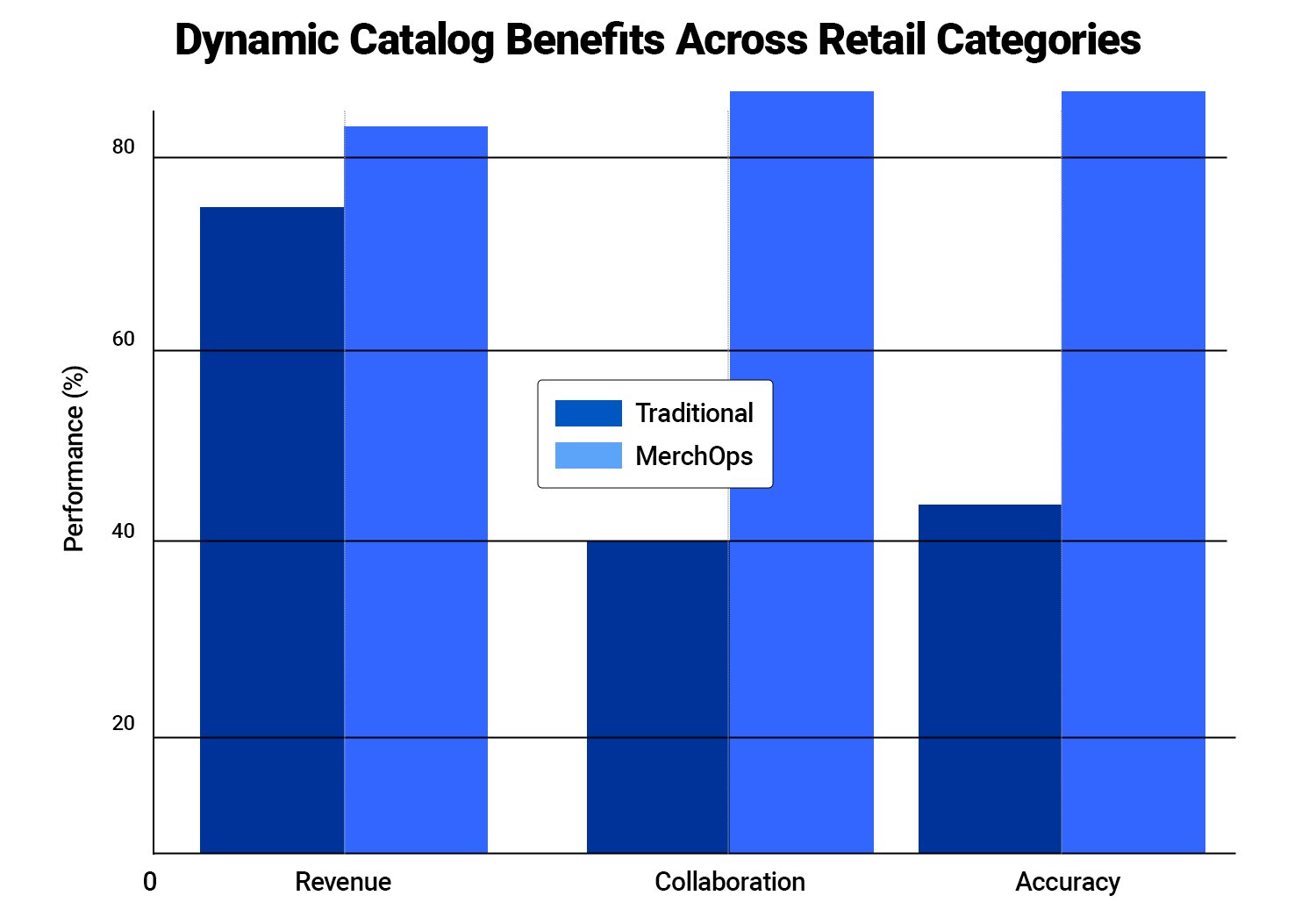
The next era will measure catalog accuracy across PIM, DAM, and MDM, supplier collaboration speed, RFQ to PO conversion times, and ROI gained from reduced errors and protected margins.
From Reaction to Prediction
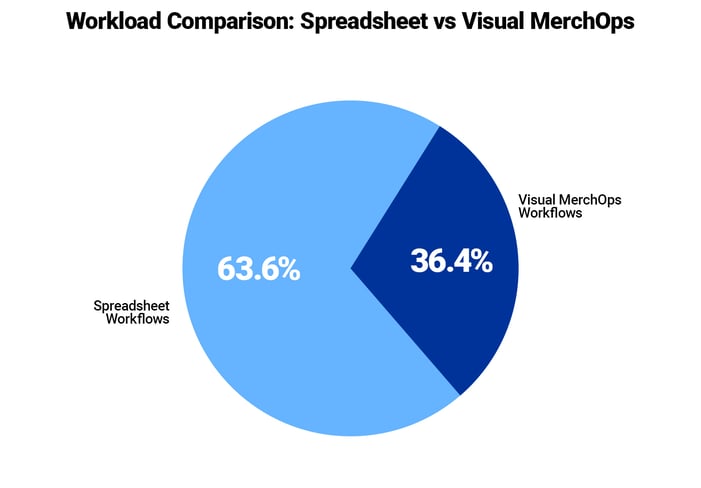
The most powerful shift comes when measurement turns predictive. Instead of asking what happened last quarter, future ready MerchOps asks what will happen next.
Some brands are already leading this way:



Artificial intelligence and analytics turn catalog data into demand signals, supplier response times into risk forecasts, and customer engagement into assortment predictions. This is the leap from execution to foresight.
The Human Side of Future Proofing
At its heart, measurement is not about dashboards, it is about people. A category manager who trusts their data is free to make bold assortment decisions. A supplier who sees clear collaboration metrics is more likely to invest in partnership. A CFO who sees merchandising tied directly to ROI no longer treats it as a cost center, but as an engine of growth.
Future proofing is not just technological. It is cultural. It gives teams the confidence to act decisively, knowing their systems will not fail them.
The Retail Gap Widens
The divide is already clear. Leaders like Walmart and Amazon are widening the gap by measuring efficiency at every stage of their supply chains. Meanwhile, laggards remain stuck on static, backward-looking metrics.
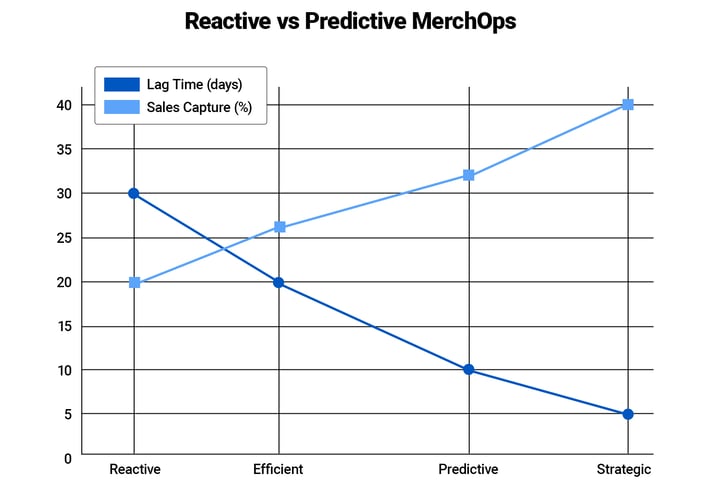
Retailers clinging to fragmented workflows will see only marginal gains, weighed down by inefficiency. Leaders embracing MerchOps are compounding their advantage each year, moving faster, more accurately, and with greater collaboration.
Future Proofing With MerchOps
MerchOps is more than a platform. It is a movement that ensures merchandising has the systems it has always deserved. It transforms product development, sourcing, supplier collaboration, and catalog management into one connected discipline.
The future will be measured in accuracy, speed to market, supplier trust, sustainability, and customer loyalty. With MerchOps, these are not abstract goals. They are daily practices, tracked, measured, and improved with every cycle.
The Next Era Belongs to MerchOps
Over this series, we have moved from new rules to strategy, from static catalogs to dynamic growth engines, from market shaping brands to the discipline of measurement and foresight. Each step pointed toward one truth: merchandising is no longer a back-office function. It is the future of retail leadership.
Future proofing retail means embracing MerchOps now. Because the retailers who measure what matters, act on insights, and unify their workflows will not just survive the next era of change, they will define it.
Further Reading
The Complete Guide to Strategic Merchandising Operations (MerchOps)
The New Rules of Fashion Merchandising
Sell Using Strategy, Not Just Execution
Measuring What Matters: The Key Metrics for Catalog Success
The Complete Guide to Visual Merchandising and Assortment Planning
Make the Shift from Static Data to Dynamic Catalogs
Brands That Move Markets
References
- Observer (2025) How Shein Stays So Fast, According to the Brand’s Strategy Head
- YUP (2025) Zara: The Fast Fashion Giant’s Winning Strategy
- Harvard Business (2024) Making Omnichannel Work for Luxury Retail
- Censhare (2025) Why Integrated MRM, DAM & PIM Matter in Retail
- Centric (2025) PIM vs DAM
- Canto (2025) Top 10 benefits of DAM and PIM
- Unifyze (2025) Global Retailer Saves $2M Annually with Integrated PIM-DAM
- Comsoft (2025) Using PIM and DAM to Supercharge Retail Marketing Automation
- PIM Core (2024) PLM is Essential for Retail & eCommerce Success
- Censhare (2025) Why Integrated MRM, DAM & PIM Matter in Retail
- Centric Software (2025) PIM vs DAM
- Softtek (2025) Supermarket increases eCommerce orders by 30%
- Catsy (2025) Shopify Catalog Chaos?
- McKinsey and Company (2024) The State of Fashion 2025
- Forbes (2024) The Secret Sauce That Drives Costco’s Customer Loyalty
- REI Co op (2024) Raises Standards For Sustainability And Inclusion In Retail
- Harvard Business Review (2023) Lululemon Athletica: Driving Global Growth
- HFA (2025) The Future of Retail Marketing
- GITNUX (2025) Sustainable Fashion Industry Statistics
- SLUDGE (2025) Walmart, Nike, and Starbucks Say They’re Green
- McKinsey & Company (2025) What is fast fashion and why is it a problem?
- Legit Check (2025) Fast Fashion Industry Statistics Report 2025
- UniformMarket (2025) Fast Fashion Statistics 2025
- Retail Dive (2024) Target scales back on in-store fulfillment strategy
- Designveloper (2025) Nike: A Case Study of Modern Commerce
- Thomas (2025) Zara Supply Chain Taps into Top Trends
- Patagonia (2023) Our Environmental & Social Responsibility
- Gartner (2024) Market Guide for Retail Assortment Management
- Shein (2024). Our On-Demand Business Model
- Centric (2023). 5 Challenges Fashion and Apparel Manufacturers Will Face
